
Tonia Pons Prats: “If we lose Ciutadella’s Market Square, we will also lose a way of buying and eating fish”
 Foodies on Menorca
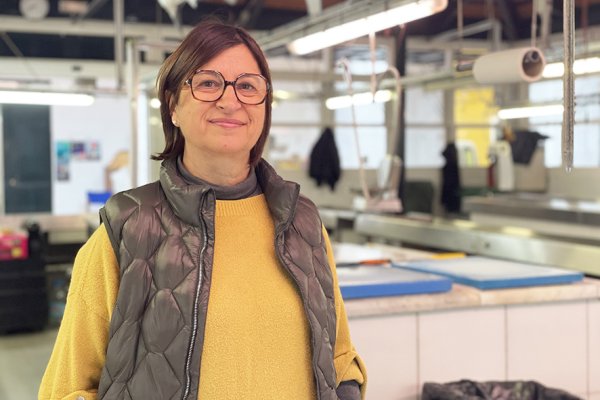
Itziar Lecea/Ciutadela - Every morning, from behind the fish counter, Tonia Pons Prats has a front-row view of how Menorca’s fishing sector has changed over the years. It has happened almost quietly, driven by staff shortages, new regulations, the difficulties faced by fishing boats and changing consumer habits that are increasingly moving away from traditional shopping.
From Ciutadella’s Plaça del Mercat, she defends the product, direct sales and, above all, the need to keep alive a place that for generations has been part of the city’s food culture. A frank conversation about Menorcan fish, the need to complement it with products from elsewhere when the sea prevents boats from going out, changes in consumer behaviour and a future that, in her view, depends on not allowing the market to die.
You have worked at the market for many years. Looking back, what has changed the most over the past twenty years?
A lot has changed. Over twenty years, or perhaps a little more, the change has been very significant. Many boats that used to come directly to sell at the market no longer do so. Instead, they sell the fish to resellers. First because of a lack of staff on board, and then because of a lack of people to come here and sell at the market. It is not easy at all to find people willing to come and sell.
Has this changed the way traditional fishermen work?
Yes. Many people have ended up doing just one thing: either fishing or selling fish. Hardly anyone does both anymore, as they used to.
How important is it to you that the market does not close?
It is very important. If the market is closed, people will end up going to the supermarkets, where many already shop anyway. What we try to do is avoid closing. There have been times when others have taken holidays and I have tried to come almost every day, even if the fish is not from Menorca because, when the weather is bad, these things happen.
How do you organise the products you sell?
I work with both small-scale fishing boats and trawlers. I collect the local fish on the same day and we weigh it right here. I also bring in fish from elsewhere. It is necessary. We work with a wholesaler and buy in Barcelona, from a supplier that also serves restaurants. Sometimes, if there is no local fish, you simply have to make do with that.
Is Menorcan fish always available?
No. With trawlers I can usually manage, but with smaller boats it depends very much on the weather. If the weather is good, then yes. Last year, for example, we had a lot of fish because the winter was very good. But if the weather is bad and the small boats cannot go out, you have to work with fish from elsewhere.
Do you explain this to customers?
Yes. But it is difficult. People are very used to having everything available all the time, but since restrictions on fishing days were introduced, that is no longer possible. It has been like this for four or five years now, and it is difficult to explain which restrictions are causing this shortage of fish, because it is not always due to bad weather.
Do you think people understand the current fishing regulations?
Not really. They do not understand how such a small place can be treated in the same way as somewhere in Valencia or Catalonia. There are regulations that consumers find very difficult to understand, especially when they feel they do not make much sense here. And even though it causes frustration, nobody really raises their voice.
Do you think society could do more to support the sector?
It is complicated. Perhaps if there were a demonstration or something similar, people would support it. But the fishermen have already gone on strike and we have respected those strikes. In the end, they are the ones who should raise their voices. But it would also be appreciated if society supported them.
What is the typical profile of your regular customer?
During the week, it is mainly older people, women in their fifties or sixties, people who no longer work and who are used to eating fish at home. On Saturdays, people who work during the week come in. During the week, it is mostly people who have more time.
And younger people?
Younger people see things differently. Consumption habits have changed a lot.
Do people from outside Menorca also buy fish at the market?
Yes, and quite a few. People from elsewhere who have settled here, especially French people. In winter, when it comes to fish, we are genuinely very lucky.
And in summer, with tourism?
Even more. There are Spaniards who own homes here, cook and buy a lot of fish. There are also Italians, French people, people renting apartments or staying for two weeks who buy fish.
Does the market still have that special appeal?
Markets always attract people. In summer there is a different atmosphere, something else, almost another ritual, even though some of that has gradually been lost.
Does the type of fish arriving at the market also change in summer?
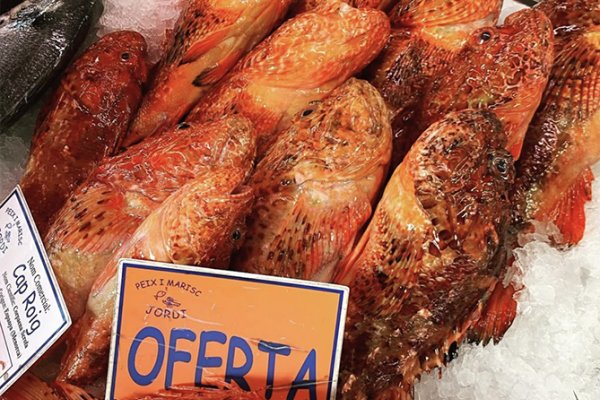
Yes, a lot. The small-scale fishing boats focus on lobster. They do not bring in as much fish. They bring gurnard, monkfish… but it becomes more difficult to get red porgy or dentex. The fish available changes a lot.
And does that make you more dependent on fish from elsewhere?
Yes, inevitably. In summer, nobody can meet demand using only fish from here. You have to bring in fish from elsewhere, while still making sure there is enough product to offer variety.


Latest posts
-
 Read more
Paco Domínguez of Mr. Bep’s, Foodies on Menorca Lifetime Achievement Award: “We anticipated the change in tourism and chose to focus on quality”
Read more02/10/2026Foodies on Menorca
-
 Read more
Josep Caules: “Our cuisine begins at sea: we want to know where every product comes from and how it reaches the plate”
Read more30/06/2026Foodies on Menorca
-
 Read more
Nensi Jover: “Menorcan cuisine needs time, patience and love”
Read more16/06/2026Foodies on Menorca
-
 Read more
Juan Hernández, Manager of Sa Llotja: “It gives the impression that Europe wants us to depend on third countries”
Read more20/05/2026Foodies on Menorca
- Publicitat

-
Publicitat



Sitemap
Cookies policy
Cookie settings
Legal notice
Privacy policy
 © Copyright 2018 - 2026