
The Government of the Catalan Generalitat deploys an action plan to promote honey produced in Catalonia
A plan to combat the Asian hornet and the creation of its own brand, a competition and a guide is planned
 Foodies on Menorca

Albert Segura/Cabrera de Mar - The Government will deploy the Action Plan for honey produced in Catalonia, which focuses on exploiting and promoting the characteristics of this product made in local production centers. Through the Department of Agriculture, a decalogue is planned in six axes and 38 actions to not only boost production and protect it, but also strengthen its nutritional value and organoleptic characteristics. The plan, which was presented this Monday at the Can Parcala beekeeping farm, in Cabrera de Mar (Maresme), includes, among other things, aid to buy beehives and equipment, as well as a shock plan to combat pests and the creation of its own brand, a competition and a guide on the different products available throughout the country.
The shock plan should allow the creation of a roadmap together with the sector for the next 4 years to highlight the honey produced in Catalonia, but also provide help to beekeepers so that their activity is competitive and generational succession is guaranteed. "Among the measures is the creation of a new brand of Catalan honeys, which will lead to a national competition of the best and we will also draw up the guide", highlighted the Minister of Agriculture, Òscar Ordeig.
In this sense, the minister also wanted to sound a warning: "We need to make the most of what we have at home, we also need to increase controls to prevent fraud in honey imports, 50% of which contain some type of fraud, and there is a lot of work to be done by the sector and the administrations here", he added.
In this sense, the plan aims to increase the number of beekeepers throughout the country and for them to be able to work in the best conditions: "We must invest in training, in generational succession, to establish spaces where these bees can settle", he added.
In addition, the fight against invasive species, such as the Asian hornet, will focus part of the plan's attention. "With climate change, here we first of all have a more extreme climate and different pests that are affecting us in a very important way", Ordeig pointed out.
For this reason, new types of treatments would be investigated that, in addition to those already carried out in Catalonia, would reduce the presence of invasive species that affect bee production. This implies exchanging experiences with other parts of the State and Europe.
The plan also envisages promoting the use of Catalan honey thanks to its organoleptic properties and taking advantage of the fact that Catalonia is a World Region of Gastronomy. "We must put honey at the centre of the Mediterranean diet as an ancient product, all of which have properties for health, for sustainability, and for the rural world", he concluded.
The plan aims to be an element of support and promotion for Catalan honey. According to data from the Department of Agriculture, in 2024 there were 110,000 bees registered, which is 13% less than the previous year, a record that has not been so low since 2015.
Currently, the regions that record the most honey production are Baix Ebre, with 25,842 bees, followed by Segarra, with 10,226, and Noguera, with 10,172.


Latest posts
-
 Read more
-
 Read more
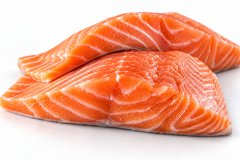
Joan Roca, Ángel León and Eneko Atxa join campaign to remove farmed salmon from menus
Read more02/10/2026Foodies on Menorca
-
 Read more
Balearic Islands Day 2027 market opens applications for artisans and producers
Read more04/09/2026Foodies on Menorca
-
 Read more
Affordable campus food truck «Nomad's» wins the Young University Entrepreneurs Awards
Read more22/07/2026Foodies on Menorca
- Publicitat

-
Publicitat



Sitemap
Cookies policy
Cookie settings
Legal notice
Privacy policy
 © Copyright 2018 - 2026