
The Forbidden Seafaring Cuisine
 Foodies on Menorca

It is said that man is the greatest of predators and that he has irrationally overexploited natural resources, causing species that were once common and abundant only a few decades ago to survive today thanks to protection measures.
In the past, there was a subsistence seafaring cuisine, especially present in summer, linked to mollusks that were gathered on the rocks or during night outings by boat, to stock up on hairy crabs, limpets, small crabs, and shore snails. These were used to cook rice dishes, stews, and “oliaigues,” or old fisherman’s recipes such as hairy crabs with onions or with tomato, among others. This overexploitation of nature forced authorities to protect them and to prohibit crab hunting, perhaps one of the oldest hunting practices on our islands, inherited from Talayotic times, a society that also relied on the gifts of the sea.
Today, only a few “poachers” allow themselves the “luxury” of going crab hunting once in summer, risking being caught by Seprona and paying dearly for this ancestral meal.

It is said that the main predator of the hairy crab in Menorca was the cobbler, a person skilled in the arts of hunting and fishing, in gathering asparagus, mushrooms, and everything the land and sea could offer. Catching crabs was not easy; it required a ritual and a very special strategy: finding their dens, joking around, and with the help of a fish tail, luring the crab out of its hole to trap it. It was a struggle between man and nature, with the danger of falling on the rocks, being bitten by a moray eel, or returning home empty-handed.
Other “delicacies” of the sea, now forbidden, were the pen shells, which are even more endangered than crabs and limpets, especially due to the 1970s and 1980s trend of turning their shells into souvenirs, painted and sold to decorate summer houses. Pen shells were eaten raw or with a squeeze of lemon, though only the muscle was edible, with a texture similar to squid and a taste like razor clams or oysters. The rest was too bitter. In Menorca, they were common on many beaches, among the seagrass. In fact, in Santandria there is still the Cova de Sa Nacra, a beach restaurant founded in the 1960s by Nicolau Cabrisas, “Colauet,” which served rice dishes in nacra shells as plates.
Other mollusks that can no longer be fished or eaten as before are goose barnacles (locally called “goat’s feet”) and date mussels.
Barnacles, together with date mussels and clams, were part of appetizers and seafaring rice dishes from the 1950s, 60s, and 70s. Perhaps the most prized mollusk among islanders, they had firm, flavorful meat and were a key ingredient in rice and stews, also eaten boiled, steamed, grilled, or roasted over oak or wild olive wood embers.
Date mussels, which lived inside rocks, tasted similar to fine clams or rock mussels. They grew very slowly, and the practice in the 1970s and early 1980s of harvesting them with oxygen tanks —a method now strictly forbidden— wiped them out. They were usually eaten grilled, sautéed in a pan with olive oil, chopped garlic and parsley, and a splash of dry white wine. They were also excellent barbecued or used in rice dishes.

As we can see, the sea once offered a wide range of products that today we can no longer consume, because we failed to harvest them responsibly. Pollution in ports and surrounding areas has also damaged these fruits of the sea, which, as mentioned, had sustained us since the ancestral Talayotic times.


Latest posts
-
 Read more
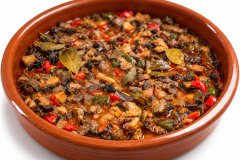
Traditional Offal Fry (Freixura or Freixurat), a Culinary Heritage Looking to the Future
Read more22/11/2026Foodies on Menorca
-
 Read more
-
 Read more
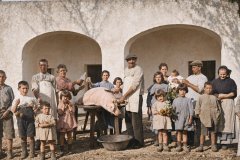
Pig slaughtering, a tradition that fed Menorcan families throughout the winter
Read more06/11/2026Foodies on Menorca
-
 Read more
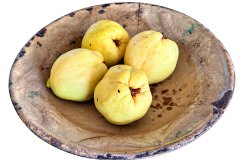
The Quince, the Fruit That Filled Homes with Fragrance in Autumn
Read more28/10/2026Foodies on Menorca
- Publicitat

-
Publicitat



Sitemap
Cookies policy
Cookie settings
Legal notice
Privacy policy
 © Copyright 2018 - 2026