
Pig slaughtering, a tradition that fed Menorcan families throughout the winter
 Foodies on Menorca
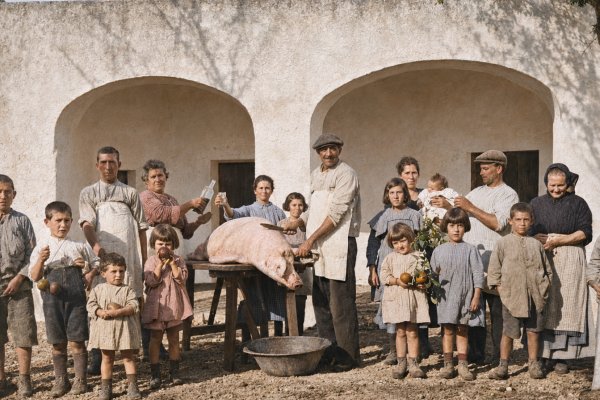
Bep Al·lès/Ciutadella - During the first half of the 20th century, traditional pig slaughtering gatherings, known in Menorca as porquetjades, were among the most important events in the island’s rural calendar. Pig slaughtering was not merely a family celebration, but an essential economic and food-related activity that ensured supplies of meat and cured sausages throughout the winter months and much of the year. On Menorca’s rural estates, these occasions brought together relatives, farm workers, neighbours and friends, who shared work, food and festivities.
The photograph accompanying this article offers a valuable testimony to that rural Menorca. In front of the farmhouse buildings, family members and workers are gathered around a freshly slaughtered pig laid out on a wooden table. Men, women and children all took part in a day when everyone had an assigned task, according to their age, experience and the customs of the time.
The pig had been fattened for months, making use of the resources available on the farm. Its slaughter provided a guarantee of sustenance at a time when domestic refrigerators did not exist and food preservation depended on salt, drying and traditional preparations.
Practically every part of the animal was used. The meat was made into sobrassada, carn-i-xulla, cuixots, and white and black botifarrons, while other cuts were preserved in salt or in containers filled with oil or rendered fat. The bones were also used to enrich family stews.
One of the most interesting details in the photograph is the presence of children holding bitter oranges. These fruits, now almost entirely absent from traditional slaughtering practices, were used to wash and scrub the pig’s stomachs and intestines, which would later serve as casings for sausages. The acidity of the oranges helped remove impurities and unpleasant odours, in a practice passed down through generations.
In Ciutadella, bitter oranges were gathered, among other places, from the orchards of Pla de Sant Joan. Once the internal organs had been removed, it was customary to take the stomachs and intestines down to the harbour waters, where they were washed. This activity, now abandoned for sanitary reasons, formed part of the everyday world of traditional pig slaughtering.
The historical chronicles of Josep Cavaller Piris specifically recall these journeys to Moll Nou, accompanied by traditional songs referring to the stomachs and intestines and the oranges needed to clean them.
Work continued throughout the day, with large cooking pots boiling, meat-grinding machines operating and experienced hands filling the sausage casings. When the time came, the sausages were hung in the farmhouse lofts, where suitable conditions were sought for their preservation.
Pig slaughtering gatherings were also an expression of community life. Yellow rice, crespellets and sweet potatos puding were among the traditional dishes shared during these occasions.
Today, photographs such as this allow us to recover the memory of a society that knew how to make the most of its resources, pass knowledge from one generation to the next and transform an essential food-related activity into a collective celebration.


Latest posts
- Publicitat

-
Publicitat



Sitemap
Cookies policy
Cookie settings
Legal notice
Privacy policy
 © Copyright 2018 - 2026