
September Farming Traditions: Saint Michael Potatoes and Saint Nicholas Bread Rolls
 Foodies on Menorca
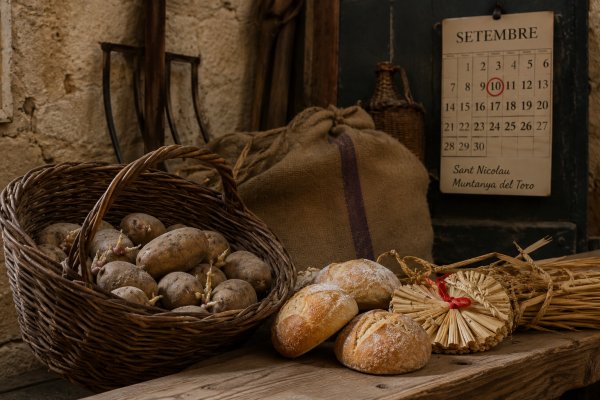
September marked a decisive moment in the traditional agricultural calendar of Menorca. It was a month of transition, when the final tasks of summer began to give way to a new farming cycle. The moon, as in so many other agricultural activities, once again served as an essential reference for deciding when the time had come to carry out certain tasks.
During the waning moon, it was time to harvest the grapes, with farmers aiming to finish before the first significant autumn rains arrived. It was also the moment to plant the so-called Saint Saint Michael potatoes, which would be ready to harvest by Christmas.
These potatoes had a very specific purpose in festive cooking. They were used to prepare traditional boiled dishes or to accompany oven-roasted turkeys, lambs and suckling pigs during Christmas celebrations. The seed potatoes had been selected months earlier, from the best harvest in June, a practice still maintained by some vegetable growers. The chosen potatoes were kept in a dark, damp room so that, when the time came to plant them, they would have developed plenty of sprouts.
September also preserves another celebration linked to rural life: Saint Nicholas, on the 10th, on Monte Toro. In the past, Saint Nicholas bread rolls were sold there, and popular belief attributed to them the power to protect against storms, thunder and lightning.
Today, the celebration has evolved and has also become a gathering of horse riders from different towns across Menorca, featuring the popular jaleo, the island's traditional equestrian display. Religious tradition, farming culture and the world of horses thus come together in a September that, in earlier times, did not signify the end of summer, but rather the beginning of a new year of work in the countryside.


Latest posts
- Publicitat

-
Publicitat



Sitemap
Cookies policy
Cookie settings
Legal notice
Privacy policy
 © Copyright 2018 - 2026