
Nensi Jover: “Menorcan cuisine needs time, patience and love”
 Foodies on Menorca
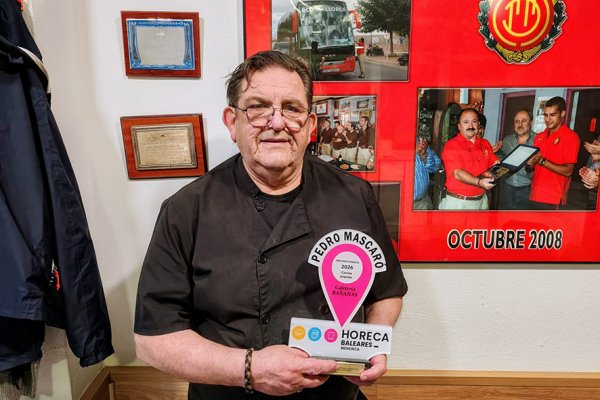
Carles Marquès/Ciutadella - Even today, every afternoon Nensi Jover (Ciutadella, 1959) follows almost the same ritual. He walks through the door of Bananas, greets those behind the bar, asks how the day has gone and sits down for a while to chat. Pedro Mascaró has been running the business for the past two years, but Nensi still walks in as though he were coming home.
For more than three decades, his name has been inseparably linked to Bananas, one of Ciutadella’s most popular bars. Behind its stoves, he has served thousands of tapas, perfected recipes learnt from his mother, watched several generations of customers come and go, and turned dishes such as roast suckling pig and pasta tubes with rabbit into true signatures of the house.
Now retired for health reasons, he looks back on a lifetime connected to the restaurant trade, the Sant Joan festivities and a way of understanding cooking which, according to him, needs only three ingredients: time, patience and love.
What was Nensi Jover like before Bananas? How do you remember the Ciutadella of your childhood?
I remember it as very clean and much quieter than it is now. Today there is far more noise and much more hustle and bustle. I was a very hardworking boy. I had little time to go out with my friends because I was always helping at home. Even on Saturdays, when they let me go out for a while, by five in the morning I already had to be back at work.
When did you realise that cooking was going to play such an important role in your life?
When I took over Bananas. At first, I had a cook and we served a daily set menu. I looked after the bar and the service. With the construction crisis at the end of the 1980s, the set menus stopped working and I had to let the cook go. That was when I stepped behind the stove myself. I didn’t know very much, so I learnt by phoning my mother: “Mum, I want to make tripe, how do I do it?” She would guide me and I would keep trying. Over time, I gained experience and began giving the dishes my own personal touch.
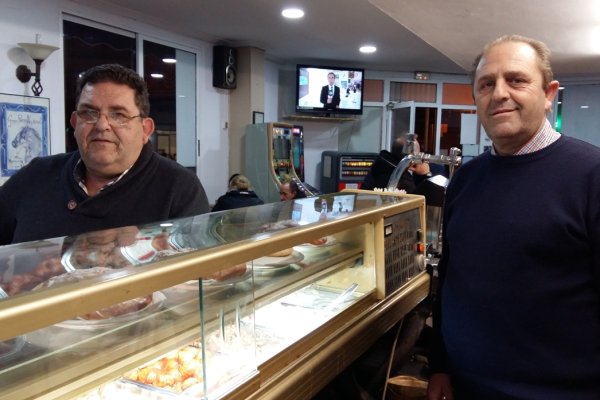
Bananas has become something of an institution. How do you explain its success?
I think it is the result of many years of hard work. Both my brother and I have always wanted to preserve the spirit of the old-fashioned bars, look after our customers and make people feel comfortable. The key has been preserving that essence.
You have always championed traditional Menorcan cuisine.
Yes. I have tried to preserve slow-cooked food, the kind of cooking that needs a casserole dish and plenty of time. Nowadays there is a lot of fast cooking and a lot of deep-frying. We have tried to preserve the dishes people have always eaten.
“I have tried to preserve slow-cooked food, the kind of cooking that needs a casserole dish and plenty of time. Nowadays there is a lot of fast cooking and a lot of deep-frying. We have tried to preserve the dishes people have always eaten.”
Which dishes have contributed most to Bananas’ popularity?
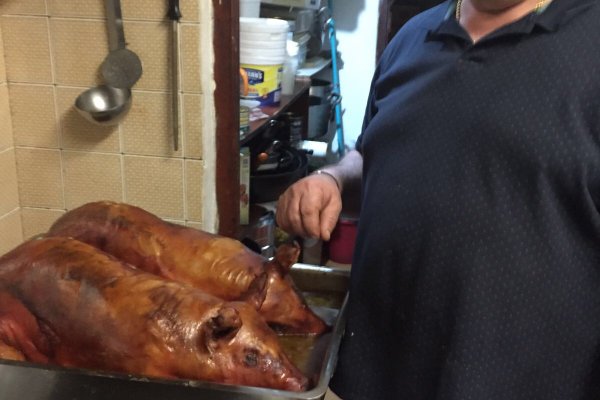
Without a doubt, the roast suckling pig. At Christmas we can make more than a hundred. It is probably the dish that has given the place its greatest reputation. But there are other much-loved recipes too, such as pasta tubes with rabbit, oliaigua or broad beans with noodles, dishes that are becoming increasingly difficult to find.
When you handed over the business, did you ask for this approach to be maintained?
Yes. I was very insistent that they shouldn’t make any radical changes. Bananas customers come looking for certain dishes and a particular way of doing things. I told them to respect that identity.
Which dishes are most in demand before Sant Joan?
Above all, cuttlefish, meatballs, meat in sauce and tongue with capers. Lots of people order them to take home before the festivities.
You are also closely associated with the Ciutadella RCD Mallorca Supporters’ Club. How did it come about?
It was thanks to Berto, “es mallorquí”. He used to come to Bananas a lot and, between jokes and conversations, the idea of creating a supporters’ club came up. We eventually founded it, and it has now been running for more than twenty years.
Bananas has been a meeting place for all kinds of people. What sort of customers come through the door?
All kinds of people come here: fishermen, hunters, people from the neighbourhood, visitors from elsewhere, Catalans, Italians... The Italians go crazy for the paellas. It’s a real mixed bag: you find absolutely everyone here.
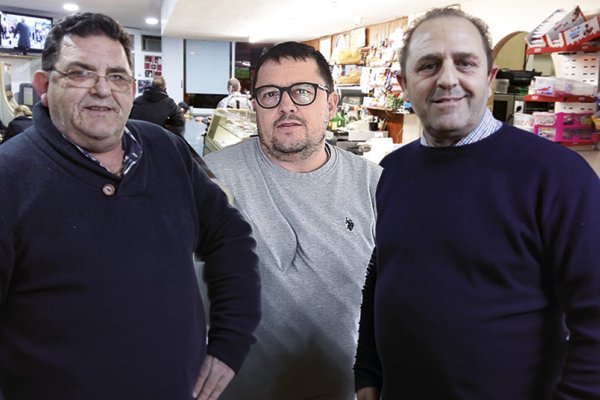
Are tourists also regular customers?
Very much so. They often ask where they can eat traditional Menorcan food and many people recommend Bananas to them. They are always very happy with it.
The Sant Joan festivities have played an important part in your life. Which moments do you remember most fondly?
The first sound of the fabiol is always special. I also have very fond memories of the old vetles des Be, when there were very few of us and everything had a much more intimate and authentic atmosphere.
Is there any dish particularly associated with Sant Joan?
A lot of people make lobster stew or paella, but I’m not sure you could say there is one single traditional dish associated with the festivities.
What is the secret to ensuring that a traditional recipe can still stir emotions after so many years?
Time, patience and love.
What has been lost from traditional Menorcan cuisine?
Above all, we have lost the time needed for cooking. Many recipes require hours of slow cooking, and nowadays people live in a hurry. There is also less interest in preserving certain traditional preparations.
Which dish do you most identify with your own style of cooking?
Pasta tubes with rabbit.
And they are difficult to find in other restaurants.
Very difficult. I don’t know if there are many other places that still make them.
How important has your family been throughout your career?
Everything. They have always helped me and have been by my side whenever I needed them.
Your experience at the Aurora was also crucial.
It was an extraordinary school. There were seventy-four tables on the terrace and the working days were very long. What’s more, back then everything was made in-house: ice creams, horchata, ice lollies... It was a completely different way of working.
If you had to write a book about Bananas, which characters would have to appear in it?
There have been so many. Biel les Xeriques comes to mind; he was already a friend of my father’s. But so many people have passed through the bar that it would be difficult to choose just a few.
Do you remember any particularly funny anecdote?
A very good one involved a visitor who came into the Aurora to make a phone call. Someone convinced him that he had to turn the handle of the ham-slicing machine for the telephone to work. And he did it, absolutely convinced it was true. It still makes me laugh when I remember it.
Now that you have retired, what do you miss most?
The contact with people. The conversations, the friends, the everyday atmosphere. That is what I miss most.
Even so, you still stop by Bananas almost every day.
Yes. I like going there, talking to Pedro and lending a hand if they ask me for advice.
How did you experience the moment when you said goodbye to the business?
I retired mainly for health reasons. If my legs had allowed me to carry on, I would have done so. But the day I handed over the business was emotional. Pedro and I hugged each other and we both shed a few tears.
How would you like to be remembered?
As a good person. Nothing more. That would be enough.
-
Bananas
C/ Pedro Cortés, 45
Ciutadella
Phone: (+34) 971 38 45 54
See more


Latest posts
-
 Read more
Paco Domínguez of Mr. Bep’s, Foodies on Menorca Lifetime Achievement Award: “We anticipated the change in tourism and chose to focus on quality”
Read more02/10/2026Foodies on Menorca
-
 Read more
Tonia Pons Prats: “If we lose Ciutadella’s Market Square, we will also lose a way of buying and eating fish”
Read more09/07/2026Foodies on Menorca
-
 Read more
Josep Caules: “Our cuisine begins at sea: we want to know where every product comes from and how it reaches the plate”
Read more30/06/2026Foodies on Menorca
-
 Read more
Juan Hernández, Manager of Sa Llotja: “It gives the impression that Europe wants us to depend on third countries”
Read more20/05/2026Foodies on Menorca
- Publicitat

-
Publicitat



Sitemap
Cookies policy
Cookie settings
Legal notice
Privacy policy
 © Copyright 2018 - 2026