
Menorca: the summer of paradoxical tourism recession with a worrying start to the season
 Foodies on Menorca

According to recent data from Egatur, Spain’s National Statistics Institute, the beginning of the tourist season has shown a clear deterioration in tourist spending in Menorca: the average daily outlay stood at €180.48, 4.1% less than in May and June 2024, ending an upward trend that had accumulated an increase of 25.5% over the previous two years.
Although the total number of visitors has not fallen drastically, with a reduction of about 10,500 tourists (4.9% compared to last year), the impact on spending has been very uneven depending on the traveler profile, threatening the strength of the local sector.
Decline in restaurants and complementary services

One of the most affected sectors has been restaurants and complementary services (shops, leisure activities, culture and sports).
Spending on shopping has dropped by 25.7%, amounting to only €6.95 million in May, according to Egatur. At the same time, leisure activities —culture, sports, entertainment— have fallen by around 5% in one year.
Meanwhile, hospitality outside package deals (bars, cafés and restaurants) has noticed a “decline” in consumption, especially among foreign tourists, who reduced spending by 5.7%. Domestic tourists are also spending less on complementary services compared to last year.
This scenario reflects a double pressure: less spending per tourist and varying severity depending on the visitor’s origin. Local service companies face full stock and weakening demand.
The shadow of growth in package reservations

By contrast, the segment of tourists on package holidays (tour operators, all inclusive) shows positive dynamics: spending on package tours grew by 10.3%, reaching €77.51 million in May, despite a slight reduction in the number of tourists in this model. This means that although fewer people travel independently, those who book packages spend more on accommodation, even with similar or shorter stays.
Hotels operating under this model have recorded increased spending, even under all inclusive regimes. In summary: decline in free spending (restaurants, shopping, activities), increase in aggregated spending via package tours (accommodation and flights included).
Tourism in supermarket chains: a change in trend
Despite the decline in restaurant spending, there has been an increase in consumption in supermarkets belonging to national and international chains. Travelers who opt for self-management (without packages) tend to buy food and drinks in large-chain supermarkets located in industrial estates, reducing their consumption in local restaurants and local food shops.
Egatur does not directly quantify this item, but local business narratives and sectoral data show that many families choose to cook in apartments or rental homes, reducing restaurant spending and increasing spending in big-chain supermarkets. This reduces income in hospitality and catering, although it does not imply less overall spending: it simply shifts towards a channel with less local economic impact, with most of the beneficiary companies being from outside the island, as is also the case in the hotel sector.
Rising accommodation and flight prices
While consumption spending is falling, hotel and flight prices are rising significantly, putting further pressure on travelers’ budgets. The Balearic Islands lead hotel price increases in Spain, with a rise of +13.1% in 2025 alone, bringing the average cost of a holiday for a couple in Menorca to €2,726, almost equal to a trip to Punta Cana at €2,883.
The increase in hotel prices and tourist taxes —up to 200% higher in destinations like Menorca for stays in 4- and 5-star establishments— contributes to making holidays more expensive for domestic tourists and reduces the competitive advantage compared to the Caribbean, where packages are all inclusive and tourists incur no extra costs for leisure and catering.
Is it cheaper to go to the Caribbean than to Menorca?
It may sound counterintuitive, but some price comparisons indicate that traveling to the Caribbean may be cheaper than to Menorca: as noted, a package holiday to Menorca for a couple costs about €2,726, practically the same as a trip to Punta Cana (€2,883).
Long-haul flights are more expensive, but the soaring rise in hotel prices and local taxes makes the total cost equal or even higher for Menorca, where additional costs for food, leisure and often transport must also be considered. Thus, paradoxically, from mainland Spain it may be more affordable to travel to a distant all inclusive destination than to stay in a mid-range hotel in Menorca.
Interpreting the phenomenon

Key factors explaining this situation, according to sources consulted by the weekly El Iris from different bodies and tourism associations, include:
International demand pressure
The 23% growth in international tourism compared to 17% in domestic tourism in 2025 reflects more travelers willing to pay more, but also greater sensitivity among domestic consumers who seek cheaper destinations or even cancel trips at the last minute. This pushes hotel prices higher to capture greater margins and take advantage of foreign demand, while domestic tourism reduces local spending.
Packaged vs independent tourism
Tourists on package holidays spend more on accommodation and flights, but generate less local consumption that would benefit restaurants and activities. Independent travelers spend less overall —fewer hotels, fewer restaurants— but a higher proportion of their spending goes to supermarkets or low-cost apartments and holiday rentals.
Local economic consequences
Restaurateurs, shopkeepers and complementary service providers are suffering falling revenues despite high hotel occupancy; external spending is not translating into local spending. Meanwhile, companies working with tour operators (large hotels, all inclusive packages) are experiencing an upward cycle, but this does not directly benefit the local economy in segments such as bars, restaurants, cafés, local guides, excursion providers, shops and leisure activities.
Fewer domestic tourists spending in restaurants and historic areas may undermine cultural offerings or reduce Menorca’s appeal as an authentic destination.
Outlook and recommendations
Possible solutions to this problem facing Menorca —which should also be understood as a return to pre-pandemic realities—, according to consulted tourism experts, include several measures that can be implemented by business associations. For example: encouraging local entrepreneurs to diversify their offerings through other promotion channels (direct, OTAs, sustainable or rural tourism niches).
Similarly, administrations and sectors linked to tourism and the primary sector should stimulate local self-managed experiences to redirect part of supermarket consumption from large chains towards Menorcan-owned supermarkets and also towards local commerce (tastings, farmers’ markets, food trucks, etc.).
Collaboration among restaurateurs is also suggested, to create seasonal menus with competitive prices and strong local product and gastronomy offers, with the aim of building loyalty among domestic tourists as well as quality French tourists, who are also beginning to stop visiting Menorca as they no longer feel as comfortable.
For administrations, it is necessary to promote off-season stays to reduce seasonality and summer pressure, and to strengthen and encourage proximity and quality tourism that shares revenues with the local economy.
A paradoxical situation
The summer of 2025 in Menorca presents a paradoxical situation: the island is still full of tourists, but many of those who come are not spending as before. The drop in restaurant and complementary spending contrasts with rising accommodation and flight prices, generating an economic imbalance driven by the overall decline in free tourist spending: shopping down 25%, leisure down 5%, average daily spending down –4%.
Meanwhile, package tourism is on the rise: all inclusive bookings up +10% and hotel activities maintaining occupancy. Similarly, there is a shift in consumption towards supermarkets and self-catering in holiday rentals, both apartments and houses in village interiors.
Another factor to consider is that hotel prices have increased by +13%, and some tourists, with little money left once at their destination, complain that the sustainable tourism tax penalizes traditional stays. Comparisons with the Caribbean, where a trip to Menorca may cost almost the same as Punta Cana, with the difference that the Caribbean trip widely includes all inclusive services, are a call for urgent adaptation.
It is clear that Menorca must reorient its tourism model towards a better redistribution of the value generated, strengthening the link between visitors and the local fabric, balancing price and quality, and redefining the new tourist profile capable of contributing more consumption and less pressure on infrastructure, without harming the island’s sustainability.


Latest posts
-
 Read more
Maó to hold the 5th Mahón-Menorca Cheese Fair from 16 to 18 October
Read more03/10/2026Foodies on Menorca
-
 Read more
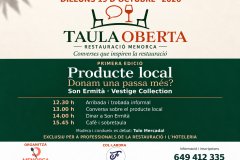
Taula Oberta launches a discussion day on local produce at Son Ermità
Read more03/10/2026Foodies on Menorca
-
 Read more
-
 Read more
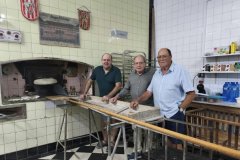
Las Campanas, a historic bakery in Sant Lluís, closes its doors
Read more02/10/2026Foodies on Menorca
- Publicitat

-
Publicitat



Sitemap
Cookies policy
Cookie settings
Legal notice
Privacy policy
 © Copyright 2018 - 2026