
A Caldereta from 1895 (and II)
 Foodies on Menorca

Bep Al·lès/Ciutadella – “After wiping your mouths with the broth of the Caldereta,” Ortiz tells us, “I begin setting the table and bringing out the following dishes.” In this way, he introduces the chapters of his essay, written, according to the author, “on a very hot day in the year 1895,” when “it was impossible to make a lobster dish because in Fornells, with the heat, they die.”
This fragment is more valuable than it may first appear, because Fernando Ortiz refers to the “broth of the Caldereta.” The phrase, seemingly anecdotal and embedded within a literary metaphor, acquires extraordinary significance. It documents the use of the word caldereta in 1895, and does so in a clearly gastronomic context. This detail helps dismantle the theory, repeated for years, that the term was a late addition, popularized only in the 1960s or 1970s with the growth of tourism and the commercial promotion of the lobster stew rebranded as “lobster caldereta.”
The importance of this reference is twofold. On the one hand, it confirms that the word already existed and circulated within the Menorcan imagination long before modern tourism. On the other, it shows that the term already had enough meaning for readers of the time to recognize it without any explanation. In other words, it was not a later invention, but rather a rooted, living expression that was fully understood within popular culture. And this, in gastronomic history, is essential: dishes exist not only because they are cooked, but also because they are named, written about, and passed down.
There is yet another especially revealing element. Ortiz connects Fornells, lobster, and caldereta, suggesting that by the end of the nineteenth century this association was already well known and meaningful. The reference not only reinforces the antiquity of the dish, but also its emotional geography: Fornells already appears as a landmark within the Menorcan culinary imagination. Furthermore, the text coexists with other references to oliaigua, formatjades, and porquejades, placing the caldereta within a coherent gastronomic universe that is deeply insular and popular.
Finding the word caldereta in a text from 1895 is, ultimately, much more than rescuing a word. It is recovering evidence that helps defend the authenticity of a culinary heritage too often simplified by the tourist postcard image. It is a reminder that Menorcan gastronomy has deep roots, nuances, and written memory. And it is understanding that, sometimes, a word discovered in time can be as revealing as the finest recipe.
“Principi i prostes” (starter and dessert), or what would amount to a complete menu, invites us to make a second reading, to immerse ourselves in the Ciutadella of the late nineteenth century through the eyes of an adolescent. A young boy, not an older person, who lives and recounts the Ciutadella of the end of the century with everyday events such as swimming at Platja Gran, going fishing and staying in Cala en Blanes, encounters with popular characters, and the Sant Joan festivities—about which he would later produce a more complete work. All this already suggests that the fourteen-year-old boy, writing in our language, would not go unnoticed.


Latest posts
-
 Read more
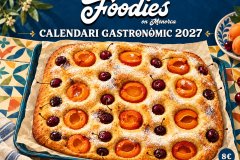
Foodies on Menorca prepares a 2027 gastronomic calendar dedicated to Menorcan baking
Read more27/09/2026Foodies on Menorca
-
 Read more
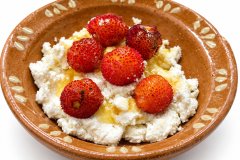
Strawberry tree fruits with honey and fresh whey curd, an old autumn dessert worth reviving
Read more23/09/2026Foodies on Menorca
-
 Read more
-
 Read more
- Publicitat

-
Publicitat



Sitemap
Cookies policy
Cookie settings
Legal notice
Privacy policy
 © Copyright 2018 - 2026