
When Carn i Xulla — “Sausage” — Stops Being a Snack
 Foodies on Menorca

Bep Al·lès/Ciutadella -Even today, if I close my eyes, I can still hear the crunch of a freshly opened roll, the grated tomato and olive oil glazing the surface, or that Menorcan butter spreading like a memory. And on top, the thin slices of carn i xulla — “sausage” in Ciutadella — with that clean aroma of pepper and well-cured pork, of a cool pantry and home. It was a snack that needed no marketing: it was identity, it was territory, it was a way of loving without saying so.
I remember the first time I heard the term carn i xulla used for what we always called “sausage.” It was one summer in Santandria, when Juan Manuel Saura and Mercedes stayed on holiday with us, together with their sons Biel and Borja. Mercedes, who was from the eastern side of the island, from Maó, called it carn i xulla, and it was the snack of many summer afternoons. It was made in Sa Muntanya by local farmers, prepared during the pig slaughter season and dried in porches to be eaten well cured yet intense and flavorful during the summer months.
But today, try to find that scene in any home or schoolyard. It is difficult — almost impossible — to see a child or teenager eating a roll with carn i xulla. Instead, you are more likely to see industrial pastries, brightly colored snacks, or cereal bars. Nor will you easily find sandwiches with carn i xulla in bars or bakeries, where fillings are becoming increasingly globalized.
Meanwhile, our carn i xulla, which last year, in 2025, was added to the list of traditional foods of the Balearic Islands, is being pushed aside, as if recognition were merely a diploma on the wall rather than a commitment on the plate.
The wound is not only about taste; it is about continuity. Carn i xulla is possibly the oldest cured meat on Menorca, heir to a tradition rooted in ancient Roman charcuterie, dating back to the conquest of 123 BC. When such a product disappears, it is not only the butcher or producer who loses — the whole island loses part of its vocabulary, its festivities, its way of sitting at the table and sharing.

This is not an isolated case. The same is happening, though to a lesser extent, with cuixot or camot, depending on the area of the island. Its consumption is gradually declining, often reduced to festive platters or social gatherings, as if local products could exist only in “celebration mode” but not in everyday life. As if tradition were acceptable only when decorative, not when nourishing.
This is where globalization hurts most: not because it introduces us to new flavors, but because it sells convenience as the final destination. Trends impose a “standard” fuet that travels well, lasts longer, and fits neatly under a single label. What is artisanal, variable, alive — dependent on hands, time, and judgment — is labeled “old-fashioned,” “strong,” or “complicated.” But the problem is not the intense flavor; it is the loss of habit. It is allowing an entire generation to grow up without that taste as part of its culinary memory.
And when that happens, the loss is swift. Culinary heritage experts warn that up to 75% of traditional dishes and preparations can disappear from one generation to the next. This is not poetic exaggeration — it is a possible reality. And Menorca, which has preserved so many small and essential things, cannot afford to let carn i xulla, the “sausage” of Ciutadella, become a second-rate product, reserved for festivities or tourist souvenirs.
The call is therefore clear and urgent: carn i xulla must not become a postcard. It must return to homes, to everyday snacks, inside rolls or simply sliced, instead of choosing fuet, longaniza, or secallona. Bars and bakeries must be encouraged to bring back sandwiches filled with carn i xulla, with tomato and olive oil and a pinch of salt, or with butter, as it used to be eaten. It must be explained to the young with pride: “This is ours, and it is good.” Because if we let it disappear, we will not only lose a cured meat that is truly ours — we will lose a way of being Menorcan.


Latest posts
-
 Read more
-
 Read more
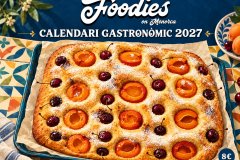
Foodies on Menorca prepares a 2027 gastronomic calendar dedicated to Menorcan baking
Read more27/09/2026Foodies on Menorca
-
 Read more
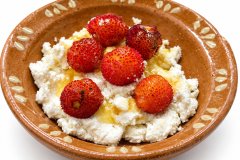
Strawberry tree fruits with honey and fresh whey curd, an old autumn dessert worth reviving
Read more23/09/2026Foodies on Menorca
-
 Read more
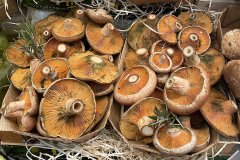
Menorca’s Autumn: Mushrooms, Quinces and Comforting Spoon Dishes
Read more18/09/2026Foodies on Menorca
- Publicitat

-
Publicitat



Sitemap
Cookies policy
Cookie settings
Legal notice
Privacy policy
 © Copyright 2018 - 2026