
The Legacy of Sephardic Cuisine in Menorca: Customs
 Foodies on Menorca

Bep Al·lès/Ciutadella - The legacy of Hebrew cuisine shows us that Jewish cooking in Menorca, and also in Mallorca, is not as unknown as we might think, and that it goes far beyond formatjades and rubiols or the traditional Easter roast lamb.
The Hebrews who lived on our islands and were later Christianised were very clear about what their diet should be at each time or period of the year, and when and how they should eat one thing or another. They also knew which foods were prohibited by Mosaic Law, carefully set down in Kashrut, which others were permitted or suitable (kosher), and which were neutral (parve), as well as how they should be consumed, interpreting the scriptures of Leviticus and the Torah itself.
Jewish gastronomy, or in the case of our island, Sephardic gastronomy, rejected pork and the mixing of milk with meat on religious grounds. In this latter case, it is a Levitical prohibition against cooking the meat of a lamb in its mother’s milk, in the same way that no type of meat may be eaten together with any animal milk or its derivatives in a single meal. In contemporary Hebrew tradition there are even two different sets of crockery and cutlery, depending on whether the meal is meat-based or dairy-based, so that opposing foods are never served on the same dishes, even if not simultaneously.
In modern times, the Talmud states that every household should have two refrigerators, one for meat and another for dairy products, as is also the case in so-called kosher restaurants, where there are two separate kitchens.
Another parve food is seafood, which does not comply with the law permitting the consumption of fish, which must have scales and fins; therefore, its consumption is forbidden.
From Sephardic cuisine we learned that food is a divine gift and that the hand of God should be recognised in it. This means that we must value what we eat, eat in moderation, and savour each dish and ingredient. The modern habit of going to the fridge and “raiding it,” devouring whatever we find, would, for the ancient Sephardic Minorcans, have been akin to stealing from God’s pantry.
Customs
There are customs we still preserve from the Sephardim, although they are gradually being lost, such as blessing food before eating. Christians continued the custom of blessing the table, and also adopted the practice of eating fish on Fridays and observing periods of fasting to purify both body and mind. Eating fish on Fridays is a syncretic distortion of the Lenten fast and, at the same time, a preparation for the Sabbath, which provided our island with a rich repertoire of Sephardic fish dishes, featuring fish and foods preserved in brine, escabeche, confit, or salt.
It is also a Sephardic legacy that every household had its own cookbook or notebook, with recipes passed down from mothers to daughters. In this way, the dishes of their cuisine have reached us today, gradually becoming Christianised when the Sephardim were forced to profess the Christian religion and to demonstrate that they no longer followed the laws of Moses. One of the main aspects of this transformation was gastronomy, where they were, we might say, forced to cook with pork fat, incorporate pork into their dishes, and eat fish without scales, such as cod during Lent, or seafood dishes.


Latest posts
-
 Read more
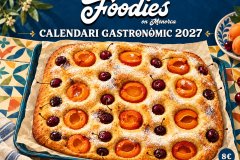
Foodies on Menorca prepares a 2027 gastronomic calendar dedicated to Menorcan baking
Read more27/09/2026Foodies on Menorca
-
 Read more
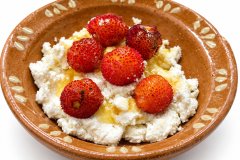
Strawberry tree fruits with honey and fresh whey curd, an old autumn dessert worth reviving
Read more23/09/2026Foodies on Menorca
-
 Read more
-
 Read more
- Publicitat

-
Publicitat



Sitemap
Cookies policy
Cookie settings
Legal notice
Privacy policy
 © Copyright 2018 - 2026