
Menorca’s wines look to the sea and assert their identity
Catalina Bibiloni opens the VI Menorca Fest with a conference on landscape, local varieties and the future
 Foodies on Menorca

The opening conference of the Vi Menorca Fest, held in the Audience Hall of the Claustre del Carme, marked on Thursday evening the beginning of this new fair, which is being held today, Saturday, in Maó. Lecturer and communicator Catalina Bibiloni, who has become one of the most active voices in promoting wine culture in the Balearic Islands, offered an in-depth perspective on the identity of Menorcan wine and the challenges facing the sector.
Under the title “Wines that look to the sea”, Bibiloni argued from the outset that defining Menorca’s wines solely through technical descriptions such as aroma, freshness or mouthfeel is insufficient. She maintained that it is essential to understand everything behind each bottle, from the landscape to the work of the winegrowers. During her talk, she emphasized the value of vineyards as cultural and agricultural heritage and warned of the risks threatening this legacy, especially in territories such as the Balearic Islands, where urban pressure endangers the continuity of vineyards and their traditional use.
Bibiloni also highlighted the importance of recovering and studying traditional varieties and encouraged the sector to deepen research and enhance this viticultural heritage. In this regard, she presented specific examples to illustrate this line of work being carried out in Menorca, such as calop blanc, a historic variety present on the islands that was traditionally used as table grapes and is now returning to the viticultural debate. As she reminded the audience, these varieties often show a greater capacity to adapt to new climate conditions and can help define a distinctive profile for the island’s wines.
Throughout her intervention, the speaker insisted on the need to link wine with its territory. She spoke about the influence of soil, climate and proximity to the sea in shaping Menorcan wines, as well as the importance of preserving these elements to guarantee their uniqueness. Climate change was also one of the central themes of the conference. Catalina Bibiloni explained that Mediterranean regions have long been working with practices adapted to drought and water stress, giving them a certain advantage over other European regions. Among these practices, she highlighted reducing planting density and combining vineyards with other crops to improve thermal regulation.
Finally, she also referred to the role of tasters and consumers, stressing that wine is part of Mediterranean culture and that understanding it requires knowledge of its surrounding context. In this sense, she called for more accessible language to bring wine closer to a broader audience.

At the end of her talk, a dialogue was opened with the audience, mostly wineries and people linked to the island’s wine sector. They took the opportunity to reflect on the sector itself and its future challenges: the need to continue producing wines in which Menorca can be recognized in the glass, to reach local audiences in order to generate greater recognition and demand, to achieve full integration into the wine lists of all the island’s restaurants in line with the “zero-kilometre” philosophy so present in Menorcan gastronomy, and the essential support of public administrations.


Latest posts
-
 Read more
Maó to hold the 5th Mahón-Menorca Cheese Fair from 16 to 18 October
Read more03/10/2026Foodies on Menorca
-
 Read more
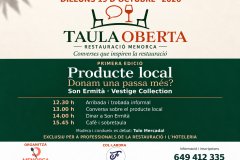
Taula Oberta launches a discussion day on local produce at Son Ermità
Read more03/10/2026Foodies on Menorca
-
 Read more
-
 Read more
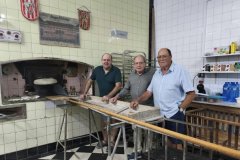
Las Campanas, a historic bakery in Sant Lluís, closes its doors
Read more02/10/2026Foodies on Menorca
- Publicitat

-
Publicitat



Sitemap
Cookies policy
Cookie settings
Legal notice
Privacy policy
 © Copyright 2018 - 2026