
Lenten Cuisine and Its Sephardic Roots
 Foodies on Menorca

Bep Al·lès/Ciutadella – This week we have begun the period of Lent, or Corema as we say in Menorca, a time of bodily purification that is observed, in different seasons or months, by virtually all religions.
The Hebrews observe four different periods or days of fasting related to the destruction of the Temple of Jerusalem or Solomon’s Temple; the Fast of the Firstborn, held before Pesach or the Jewish Passover; and the Fast of Esther before the festival of Purim, in addition to the fast of Yom Kippur, the fast of the fourth month or Tammuz, that of the fifth month Tisha B’Av, that of the seventh month Tzom Gedaliah, and that of the tenth month Asarah B’Tevet. Arabs also observe their own period of fasting, Ramadan.
Our Lent is a period of purification of both body and soul lasting 40 days, or seven weeks. On the one hand, we prepare our minds for Easter Sunday; on the other, we cleanse the body of the excesses that began at Christmas, continued with the festivities of Sant Antoni, the traditional pig slaughters, and the Carnival celebrations or Darrers Dies.
Lenten cuisine in Menorca features seasonal vegetables and greens as its main ingredients: spinach, broad beans, asparagus, artichokes, green beans and flat beans, cauliflower… along with legumes such as chickpeas, beans, lentils and dried peas, all cooked without any animal fat or protein, except for eggs. Eggs appear in dishes such as asparagus omelettes or panadera potatoes with artichokes, flat beans (snow peas), beans and hard-boiled eggs. It is also the season for endive fritters and vegetable dishes accompanied by fish.
Fish is another central element of Lenten cooking. The custom of eating fish on Fridays is a Sephardic legacy that we adapted to our Lent. In fact, many older people still maintain this tradition. Lent was traditionally the season for roasted gerret (picarel), pinxes, horse mackerel, pandora bream, rock forkbeard and others, as well as for cod above all else. In the past, cod was an affordable food for the humblest families; today it has become a gourmet product.
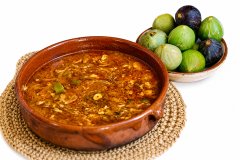
Cod also carried an element of imposition for those Jews who had converted to Christianity. Their religion forbids the consumption of fish without scales or those lacking fins, such as conger eel, moray eel, and cartilaginous fish like ray, smooth-hound, dogfish, as well as shellfish. In the case of cod, eating it was also a way of demonstrating that they had left their former religion behind. It became part of Sephardic dishes such as chickpeas with spinach, which during Lent we prepare with cod under the name potaje de vigilia (Lenten stew). This was similar to the incorporation of pork lard into the dough of formatjades, pastissets, and possibly ensaimadas and coques bambes.
We also have pastries typical of Lent, including fish-filled rubiols and formatjades, formatjades made with fresh curd cheese or flaons, asparagus pies, vegetable pies, chard pies, and both covered and open pies whose main ingredients are vegetables and fish. Many of these pies are made with fish without scales, such as smooth-hound, dogfish or ray, as well as albacore or tuna.
Among our traditional Lenten dishes, in addition to those mentioned such as panadera with hard-boiled eggs and chickpeas with spinach, we find omelettes made with broad bean shoots, fresh cheese omelettes, noodles with ray or dogfish, cod with leek sauce, baked cod with potatoes, cod panadera, dressed dried peas, and all those traditional dishes in which meat is absent.


Latest posts
-
 Read more
-
 Read more
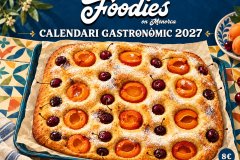
Foodies on Menorca prepares a 2027 gastronomic calendar dedicated to Menorcan baking
Read more27/09/2026Foodies on Menorca
-
 Read more
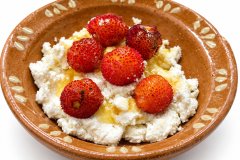
Strawberry tree fruits with honey and fresh whey curd, an old autumn dessert worth reviving
Read more23/09/2026Foodies on Menorca
-
 Read more
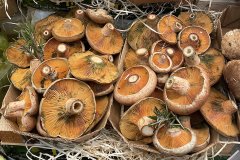
Menorca’s Autumn: Mushrooms, Quinces and Comforting Spoon Dishes
Read more18/09/2026Foodies on Menorca
- Publicitat

-
Publicitat



Sitemap
Cookies policy
Cookie settings
Legal notice
Privacy policy
 © Copyright 2018 - 2026