
Having jujubes
 Foodies on Menorca

Bep Al·lès / Ciutadella – When September arrived it was time to go back to school, to reunite with those few friends you hadn’t seen all summer. It was returning to routine after months of camps in La Vall, village festivals, parties at someone’s house when the parents weren’t around… It was a time of books inside satchels hanging on our backs –they weren’t backpacks yet–, of cycling to school, and, also, that beginning of the school year was the time to eat jujubes.
Those of us now in our sixties were passionate about jujubes, and you could tell from the pits scattered in the schoolyard or in the nearby streets. I remember going to buy them at Nyi-nyà’s during “recess,” and more than once, after class, a group of us would gather to pick jujubes, which were even tastier than the ones bought.
A time of memories, good and bad, but memories nonetheless.
Nowadays there are still a few grocery stores, and some supermarkets in Menorca’s capital that sell jujubes, but my goodness, at what a price—over 6 euros a kilo. If we had been told that we’d be paying more than 1,000 pesetas for a kilo of jujubes, I think more than one of us would have thought about buying a garden plot and planting jujube trees.

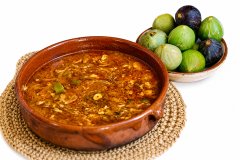
According to the encyclopedia, “the jujube is an edible drupe, ellipsoidal or globular in shape, reddish or brownish when ripe, produced around September, with a single pit. It looks very similar to a plum, but its taste is closer to that of an apple.”
Jujubes are rich in sugars and mucilage and contain a significant amount of vitamin C. They are valued for their nutritional quality as a fruit, fresh or dried. Culinary preparations with jujubes are similar to those made with apples or plums. It is one of the fruits of the traditional Mediterranean diet and was mentioned by Herodotus. The jujube was a symbol of silence in ancient Rome and was used in the temples of Prudence. In the Emilia-Romagna region, a jujube tree was planted in sunny spots to bring good fortune. In Menorca, every house had a jujube tree in the courtyard; the fruits were harvested and dried to later make a syrup used to treat coughs and throat ailments.
According to Pliny, jujubes were highly valued as a mild laxative and were kept safe from air inside boxes made of beech or linden wood.

Although today their consumption is very limited in urban areas, it is still customary to eat jujubes in autumn in our islands, as well as in the Baix Ebre and Montsià regions, in many rural areas of Valencia, and in Murcia. Jujube aioli can be prepared, an excellent accompaniment for boiled vegetables. Some people bake them as they do apples, and they are also used for jams, syrups, and even in Italy, in the Veneto region, a jujube liqueur is made, called brodo di giuggiole. In popular culture, jujubes are also compared to testicles, with sayings like “Having jujubes,” “What jujubes you’ve got,” or “You have no jujubes,” but these don’t belong in our gastronomy section, where we can instead advocate for recovering the tradition of eating jujubes, a small, truly local autumn fruit.


Latest posts
-
 Read more
-
 Read more
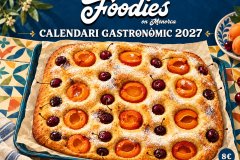
Foodies on Menorca prepares a 2027 gastronomic calendar dedicated to Menorcan baking
Read more27/09/2026Foodies on Menorca
-
 Read more
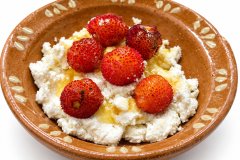
Strawberry tree fruits with honey and fresh whey curd, an old autumn dessert worth reviving
Read more23/09/2026Foodies on Menorca
-
 Read more
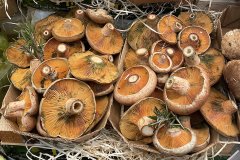
Menorca’s Autumn: Mushrooms, Quinces and Comforting Spoon Dishes
Read more18/09/2026Foodies on Menorca
- Publicitat

-
Publicitat



Sitemap
Cookies policy
Cookie settings
Legal notice
Privacy policy
 © Copyright 2018 - 2026