
Food Journalism in the Age of the “Like”
 Foodies on Menorca
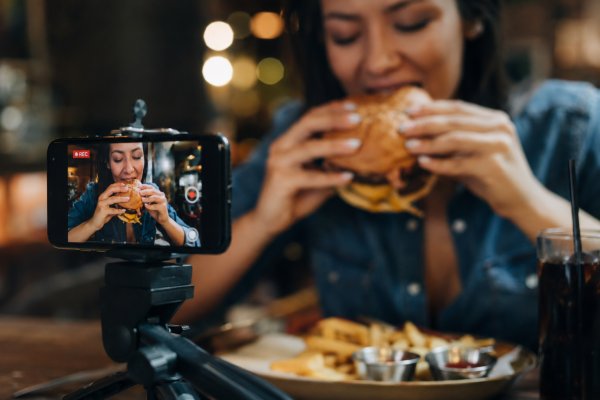
Gastronomy is experiencing one of the most media-driven moments in its history. Never before have we talked so much about restaurants, chefs, products, culinary trends, or dining experiences. Yet paradoxically, it has never been so difficult to distinguish between information, promotion, and mere entertainment. The massive rise of food influencers on social media has changed the rules of the game and sparked an uncomfortable but necessary debate: who is truly informing the public about gastronomy, and who is simply creating content to feed an algorithm?
Those of us who have spent years working in food journalism have witnessed the profession transform at dizzying speed. For decades, culinary criticism was built on knowledge, experience, judgment, and storytelling. A food critic did not simply describe a dish; they contextualized a cuisine, interpreted a chef’s technique, analyzed the ingredients, service, concept, and gastronomic philosophy of a restaurant. There was research, comparison, rigor, and above all, independence.
Today, much of that space has been replaced by fifteen-second videos where what matters is not what is being eaten, but how dramatically a burger drips in slow motion or how far melted cheese stretches before viewers scroll to the next reel. Gastronomy has too often become a visual spectacle designed for fast consumption.
From Culinary Analysis to Viral Entertainment
The evolution of social media has profoundly changed the way we communicate. Specialized blogs and long-form articles have given way to Instagram, TikTok, and YouTube Shorts. Algorithms reward immediacy, visual impact, and emotional reactions. Many creators have mastered that game perfectly.
The problem begins when entertainment is presented as food criticism.
Today, countless profiles recommend restaurants without offering any real context: they do not explain the cuisine, describe techniques, discuss ingredients, analyze service, or explore the culinary philosophy behind a restaurant. They simply eat in front of a camera and generate visual impact. “Watch me eat” content has, in many cases, displaced traditional food journalism.
This is not about demonizing social media or denying its usefulness. Communication evolves, and journalists must adapt to new formats. Video, reels, and short-form content can perfectly coexist with serious and professional analysis. The problem arises when the content disappears and only the spectacle remains.
The “Free-Die” Culture: When Invitations Shape the Narrative
Another worrying phenomenon is the rise of foodie profiles that only exist thanks to free invitations. Restaurants invite creators in exchange for flattering posts. Influencers only talk about places where they do not pay. Recommendations are often born not from honest evaluation, but from implicit marketing agreements.
Food journalism has always coexisted with press invitations, sponsored trips, and presentations. But there was one fundamental difference: editorial independence. A journalist could accept an invitation and still write a negative review—or choose not to publish anything at all if the experience was not worthwhile.
The logic of many influencers works differently: if there is an invitation, there is a post. That transforms gastronomic recommendation into disguised advertising.
The issue is not merely ethical; it also affects consumers. Audiences believe they are receiving genuine recommendations when, in reality, they are often watching marketing campaigns disguised as spontaneous experiences.
The Dictatorship of the Algorithm
Social media has also transformed audience behavior. And here, collective self-criticism is necessary.
The most thoughtful content—pieces analyzing a chef’s technique, explaining a culinary concept, or exploring ingredients in depth—usually generates far less engagement than simplistic headlines such as “the most expensive restaurant,” “where celebrities eat,” or “the viral burger you must try.”
Algorithms reward exaggeration, spectacle, and fast consumption. Many creators adapt their discourse accordingly because metrics rule everything.
But reducing gastronomy to an endless sequence of viral rankings and hyperbolic videos impoverishes culinary culture. Cuisine is part of a country’s cultural heritage. It speaks of territory, identity, tradition, creativity, and knowledge. It deserves more than becoming a disposable entertainment product.
The Value of the Professional Food Journalist
Defending the role of the food journalist is not an exercise in nostalgia or elitism. It is about defending a profession built on specialization, knowledge, and informational responsibility.
A food critic studies, compares, contextualizes, and argues. They understand culinary history, cooking techniques, products, trends, and the restaurant industry itself. They possess the judgment needed to distinguish between a fleeting trend and a truly solid gastronomic proposal.
An influencer may generate impact. A journalist provides depth.
Both profiles can coexist, but they are not the same. In the same way that a football fan with millions of followers does not replace a sports journalist, filming oneself eating in front of a camera does not automatically make someone a food critic.
Recovering Critical Perspective
Gastronomy needs to reclaim the value of quality content. We need to explain what lies behind a dish. To tell the human stories inside every kitchen. To analyze the silent work of producers, chefs, and dining room teams. To go beyond “Instagrammable spots.”
Because when serious criticism disappears, the loser is not the journalist. The reader loses. The diner loses. And gastronomy itself loses.
Perhaps the real question is not whether we should trust influencers or not. The real question is what kind of information we want to consume—and what kind of gastronomic communication model we are feeding every time we reward noise over knowledge.


Latest posts
-
 Read more
La Bodega del Jazzbah, signature tapas with a Mediterranean soul
Read more24/09/2026Foodies on Menorca
-
 Read more
Foodies on Menorca recognises the work of restaurants, hotels and producers
Read more20/09/2026Foodies on Menorca
-
 Read more
Foodies on Menorca Vintage revives the spirit of the 1950s to celebrate Menorcan gastronomy
Read more09/09/2026Foodies on Menorca
-
 Read more
White shrimp gain ground in Menorca’s catches as red shrimp become scarcer
Read more28/08/2026Foodies on Menorca
- Publicitat

-
Publicitat



Sitemap
Cookies policy
Cookie settings
Legal notice
Privacy policy
 © Copyright 2018 - 2026