
They Produce in Les Garrigues the Only Oil in Catalonia Based on Biodynamic Agriculture that Respects Nature’s Cycles
Oli Cometes, from La Pobla de Cérvoles, produces 5,000 litres, 40% of which are exported to Northern Europe and Germany.
 Foodies on Menorca

Author: Alba Mor/La Pobla de Cérvoles — Producing a top-quality extra virgin olive oil through biodynamic agriculture, a farming method that respects nature’s cycles and the environment. This is the philosophy followed by Martin González and Neus Costa, producers and co-owners of Oli Cometes, whose estates are located in La Pobla de Cérvoles (Les Garrigues). They plan agricultural work according to lunar cycles and care for the ecosystem of their fields without applying chemical products to the trees. This way of working has made them the only olive oil producers in Catalonia to hold the international Demeter certification, highly valued in Northern European countries and Germany. Oli Cometes produces 5,000 litres annually, 40% of which are exported.
“In the past, older generations knew the best times to carry out farming tasks according to the moon phases. This is something that has been lost, and biodynamic agriculture seeks to recover it,” explained González, who pointed out that the origins of this method lie in Germany, at a time when some farmers sought alternatives so their production would not depend on chemical products.
In fact, González stated that “no chemical products have been applied on our estate for six years” and that they replace them with herbal infusions. Thus, instead of applying, for example, copper sulphate, they use infusions made from different plants depending on the tree’s needs. However, he acknowledged that “a copper sulphate treatment is not as effective as an infusion treatment. We carry out two or three applications.”
Regarding pests such as the olive fruit fly, one of the most destructive and harmful to olive oil production and quality, González explained that they “play with nature” to avoid damage: “The fly is selective and looks for large olives. Arbequina olives are very small. So, we have interspersed some trees that produce larger olives, and these act as bait.” The Oli Cometes estate covers 27 hectares, 13 of which are olive groves, while the rest is woodland. “Everything is integrated. We take great care of the soil, and that creates a great deal of biodiversity. Roe deer, wild boars, foxes, bats — a bit of everything,” Costa commented.
This producer also highlighted the importance of the lunar calendar in enhancing farming results. “When the moon moves the tides, all the water within the plant rises upwards. That is the right moment for foliar treatments. On the other hand, when the moon is descending, it is time to apply compost because the roots absorb the product better,” she explained.
Product with the Demeter Certification
All this work is recognised with the international Demeter certification, a label considered “far more demanding” than organic farming standards. Among other requirements, it prohibits the use of plastics, ensures that tools such as containers and hoses are phthalate-free — chemical compounds added to plastic — and requires compost applied to the soil to include biodynamic preparations. It is a “highly recognised” certification in Nordic countries and “very sought after” by restaurants and supermarkets.
From Economists to Farmers
Born in Barcelona and economists by profession, González and Costa purchased the land they now cultivate in 2015 without any intention of becoming farmers. “We were looking for a place to spend summers, and we really liked this estate. During the first year, a local young man worked the land and we brought the olives to the cooperative. More and more people began asking us for oil, and in 2018 we decided to create our own brand,” Costa explained. It was while learning to cultivate organically that they discovered the biodynamic method.
Early Years and Harvests During Drought Periods
González and Costa explained that during the first years of converting the estate, they noticed a drop in tree production. Nowadays, however, those figures “have recovered,” and yields are now “equal or similar” to those achieved when the land was farmed using conventional methods.
Moreover, while some producers in the area saw their production severely reduced during drought periods due to water shortages, these producers from La Pobla de Cérvoles stressed that “we were able to harvest,” which they attribute to biodynamic methods. Nevertheless, they do not rule out installing support irrigation systems on the estate in anticipation of future drought episodes.


Latest posts
-
 Read more
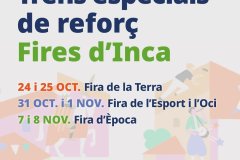
SFM increases weekend train services for the Inca fairs leading up to Dijous Bo
Read more21/10/2026Foodies on Menorca
-
 Read more
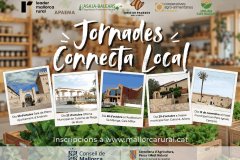
Balearic Islands Government promotes five business meetings to facilitate the sale of local products to Mallorca's tourism, retail and restaurant establishments
Read more18/10/2026Foodies on Menorca
-
 Read more
The Balearic Islands Government holds the third Gathering of Regional Associations and Centres, with Aragon taking centre stage
Read more18/10/2026Foodies on Menorca
-
 Read more
More than 1,200 bakery students have taken part in the Government's motivational talks to encourage generational renewal
Read more16/10/2026Foodies on Menorca
- Publicitat

-
Publicitat



Sitemap
Cookies policy
Cookie settings
Legal notice
Privacy policy
 © Copyright 2018 - 2026