
Cocas, the queen of our summer pastries
 Foodies on Menorca

Bep Al·lès / Ciutadella – Tomorrow marks a new edition of the sweet and savoury coca competition organised by Casino 17 de Gener, an event that grows every year in participation, quality, and in its mission to defend a truly local product we must not let disappear.
The cocas
Cocas, whether sweet or savoury, were —and still are in some households— the go-to snack during summer months, though they exist in versions for all seasons and for the main festivities of our calendar.
According to the DCVB, coca “is a dough made from flour, kneaded and baked with oil or lard, in a circular or oval flattened shape, to which various ingredients are usually added” such as oil and sugar, meat, fish, fruits, vegetables, tomatoes, butter, sobrasada, cream, jam, etc.
Cocas were also a way to feed an entire family economically, as with flour, water, yeast, and fat —usually pork lard for savoury ones and Menorcan butter for sweet ones— people made use of vegetables, fruits, and over-cured sausages, like in the case of “tovada” cocas with cured sobrasada.
Other variations are made with different doughs and ingredients, such as puff pastry cocas, cocas with roes, “bamba” cocas (also called Sant Joan ensaïmadas) made with flour, sugar, butter or lard, and eggs; “congret” cocas made with eggs, sugar, and starch powder; and potato cocas made with flour, mashed boiled potato, milk, and eggs, baked slowly.
Some have disappeared from bakeries, such as “xuia” cocas (with pork belly), once valued in lean times; “beta” coca, a type of barley bread eaten by the poor; “coca de ca” made with bran to feed dogs; or the “Darrers Dies” coca, typical at Carnival, topped with pork belly slices, sobrasada, and blood sausage.
In Die Insel Minorca, Archduke Ludwig Salvator of Austria listed, at the end of the 19th century and beginning of the 20th, 32 types of coca —many now gone— such as “coques caldes”, “monyaco” cocas, Easter cocas, asparagus cocas, mushroom cocas, and those made with wild herbs like colissos.
In my book Sa cuina des poble de Menorca, rebosteria i pastisseria (2024, reissued late last year), I gathered 39 savoury coca recipes, 94 sweet, 8 puff pastry, 10 “congret”, and 20 “bamba” cocas —a total of 171 recipes. This shows our rich coca culture and its place as one of our main gastronomic identity markers.
We must encourage their consumption, recover the habit of going to bakeries and enjoying coca instead of industrial pastries —neither healthy nor ours— and also make them at home with local wheats like “xeixa” and organic flours, along with seasonal fruits and vegetables. In doing so, we support local products, zero-kilometre gastronomy, our farmers, and the primary sector, boosting our local economy and preserving an essential part of our gastronomy and heritage. Personally, I believe we should say less pizza and more coca.


Latest posts
-
 Read more
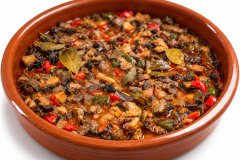
Traditional Offal Fry (Freixura or Freixurat), a Culinary Heritage Looking to the Future
Read more22/11/2026Foodies on Menorca
-
 Read more
-
 Read more
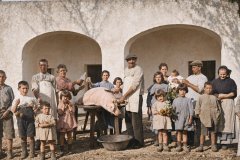
Pig slaughtering, a tradition that fed Menorcan families throughout the winter
Read more06/11/2026Foodies on Menorca
-
 Read more
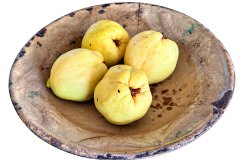
The Quince, the Fruit That Filled Homes with Fragrance in Autumn
Read more28/10/2026Foodies on Menorca
- Publicitat

-
Publicitat



Sitemap
Cookies policy
Cookie settings
Legal notice
Privacy policy
 © Copyright 2018 - 2026