
Time for bullit
 Foodies on Menorca

Bep Al·lès/Ciutadella - The bullit of Menorca, like other bullits from the Balearic Islands and Catalonia —similar to the cocidos of mainland Spain— is gaining more and more followers. Outside the island, many restaurants now dedicate one day a week to this three-course dish, as was done in Menorca before Christmas. For this reason, the initiative promoted by PIME restaurants has been warmly welcomed, although so far only a few establishments have joined.
Reviving the lost traditions of our grandmothers and mothers, when each day of the week featured a different dish, should be one of the goals of restaurants committed to preserving our traditional cuisine. In this way, they can offer customers home-style cooking in tune with the gastronomic seasons of the year, using locally sourced products.
Brou is associated with a hot dish for cold days; therefore, as temperatures drop, it becomes more appealing and at the same time healthier. Traditionally, when bullit was —or still is— prepared at home, a large pot was made, providing meals for two or three days. On the third day, it was common to prepare purée, meat with tomato, or raoles, fritters or croquettes made from the bullit, since in our grandmothers’ kitchens everything was used and nothing went to waste.
According to the English military officer John Armstrong, author of The History of the Island of Minorca, written during British rule when Richard Kane was governor, the dish most appreciated by the Menorcans is brou. During the cold months, they always keep a pot simmering throughout the week. This dish also appealed to the English, and, as Armstrong explains, this culinary custom was taken to Great Britain, where it was enjoyed at the finest tables in the English capital.
Brou or vianda

Brou, also known as vianda, is a soup made from vegetables and meat, served hot as a first course. In northern regions of mainland Spain and on the Castilian plateau, it is also common to find bowls of broth in bars to warm up.
In Menorca, the term brou is mainly used when referring to a soup made with vegetables and meat that highlights a main ingredient, such as beef broth, chicken broth or pigeon broth, or when it is intended for a celebration, such as Christmas broth, or for a person, as in broth for the sick, considered restorative.
Vianda is the soup from the bullit served with pasta, usually thin noodles or angel hair, as well as other types of pasta that have almost disappeared today, such as maravilla, pinyonets or little stars. It was always the first course of the bullit. In the case of Christmas vianda or brou, the traditional pasta is galets, which in some households in Ciutadella are called tiburons.
It should be noted that in Menorca the galets used in Christmas broth are hollow, whereas in Mallorca they are filled with minced meat, similar to our pilota.
The bullit

Menorcan bullit is made with a bundle of herbs and soup vegetables (thyme, carrot, parsnip, celery…), potatoes, chickpeas and a piece of cabbage, along with meats such as beef shank, chicken or hen, a piece of fresh pork belly, sobrassada and the pilota.
All these ingredients are boiled in water for a couple of hours —or more quickly in a pressure cooker— and the meal is served in three courses: first the vianda, second the boiled potatoes, and third the vegetables and chickpeas with the meats. Some people also add green beans, which are eaten with the potatoes and carrots.


Latest posts
-
 Read more
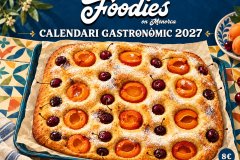
Foodies on Menorca prepares a 2027 gastronomic calendar dedicated to Menorcan baking
Read more27/09/2026Foodies on Menorca
-
 Read more
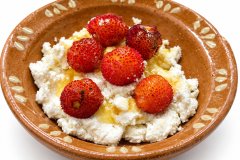
Strawberry tree fruits with honey and fresh whey curd, an old autumn dessert worth reviving
Read more23/09/2026Foodies on Menorca
-
 Read more
-
 Read more
- Publicitat

-
Publicitat



Sitemap
Cookies policy
Cookie settings
Legal notice
Privacy policy
 © Copyright 2018 - 2026