
2026, International Year of the Woman Farmer
From Cheese to Diversification: The Silent Strength Sustaining the Menorcan Countryside
 Foodies on Menorca

In 2026, the United Nations General Assembly has declared the International Year of the Woman Farmer (IYWF 2026), coordinated by the FAO, to highlight the essential role of millions of women in agri-food systems and, above all, to drive real change against the inequalities they still face in access to land, financing, training, technology, services, and recognition.
On social media — Instagram, X, TikTok, as well as YouTube and Facebook — the narrative is already clear: there is a generation of rural women who are not asking for permission to exist. They define themselves as farmers, livestock breeders, producers, winemakers, horticulturists, or olive growers; they share their daily lives without filters; they exchange knowledge and, at the same time, denounce structural precarity: extremely long working days, bureaucracy, prices that fail to cover costs, lack of generational renewal, and, too often, invisibility. In 2026, this global loudspeaker can turn digital conversation into concrete policies: not just to “pay tribute,” but to transform.
An International Year That Seeks to Move from Symbol to Action

The FAO presents IYWF 2026 as an opportunity to place at the center a reality that is both simple and powerful: women farmers are key to food security, nutrition, and the economic resilience of entire communities, yet they continue to face persistent gender gaps. Institutional discourse stresses the need for measures to close inequalities in access to resources and services and to strengthen female leadership across the entire food chain (production, processing, and trade).
In Europe, and especially in the Mediterranean region, there is an additional cultural dimension: farming represents identity, landscape, and heritage. When a woman sustains a farm, she also sustains language, community, and life in rural villages. For this reason, the International Year carries a meaning that goes beyond agriculture: it speaks of rights, equity, professional dignity, and the future.
Menorca: Women Farmers Who Are Also Livestock Breeders… and Producers

If there is one place where the concept of “woman farmer” requires a broad definition, it is Menorca. Here, farming often means an inseparable combination of land + livestock + processing, since a significant number of farms have historically focused on milk and cheese production. As a result, many women in the Menorcan countryside are simultaneously livestock breeders and processors, with responsibilities ranging from animal handling to hygiene, record-keeping, production, quality control, marketing, and sometimes direct customer service.
In this context, the importance of the Mahón-Menorca PDO (Protected Designation of Origin) is more than a label: it represents a model of productive landscape, expertise, and added value that shapes daily life on many farms. Speaking about the Menorcan woman farmer therefore also means speaking about the woman who milks cows, cares for calves, works in the cheese dairy, labels products, manages orders, and defends a product deeply tied to identity in a global market.
Here, social media also plays a new role: many producers (as well as young women returning to or entering farming for the first time) share their daily lives with a direct, educational, and proud tone. They show what once remained within the farm: births, storms, drought, feed supplies, veterinary visits, maintenance tasks — and also the good moments, when a batch turns out well or when a customer says that a cheese “tastes like Menorca.”
Diversifying to Survive: Vegetables, Fruit, Oil, Wine… and Direct Sales

At the same time, Menorca is not only about cheese. In recent years, there has been growing interest (with different intensities and models depending on the farm) in diversification: seasonal vegetables, fruit, small-scale processed goods, olive oil and vineyard projects, and direct sales or short supply chains. This diversification responds to various needs: reducing dependence on a single product, increasing margins, adapting to new demands, and in some cases opening space for different professional profiles within the same farm (for example, a woman launching an organic vegetable project, agritourism initiative, or processed goods line).
Narratively, this fits perfectly with the global story of IYWF 2026: women who innovate, undertake, connect rural producers with consumers, and build community. It is no coincidence that these initiatives gain strong traction on social media — they offer social, gastronomic, and environmental value.
Recurring Obstacles (Also on the Island)

What the International Year highlights — and what is repeatedly voiced on social media — is that inequality is not an abstract idea. It has concrete forms:
-
Recognition and ownership: the work of many women is still perceived as “help,” when in reality it is central to farm operations.
-
Access to resources (land, credit, machinery, advisory services): the gender gap is not always explicit, but it is evident in opportunities and professional networks.
-
Time and caregiving: physical and managerial work is often combined with family responsibilities, resulting in endless working days.
-
Professionalization and generational renewal: entering agriculture is difficult for anyone, but for women it also means breaking stereotypes and, at times, proving themselves twice over.
The UN and the FAO present IYWF 2026 as a year to “close gaps” and improve conditions. Because if women’s farming is essential, it must also be sustainable as a livelihood.
A Narrative That Must Endure Beyond 2026
One risk of “International Years” is that they remain symbolic campaigns. The challenge, therefore, is to use 2026 to establish concrete measures: training and mentoring programs, improved access to resources, institutional visibility, and cultural change within the sector.
In Menorca, the woman farmer — livestock breeder, processor, producer, entrepreneur — is a key figure in understanding the countryside and the landscape the island seeks to preserve. If 2026 helps ensure that this work is seen, valued, and better paid, it will not just be a slogan: it will be a step toward a farming sector with a future.


Latest posts
-
 Read more
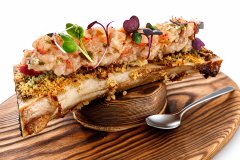
La Bodega del Jazzbah, signature tapas with a Mediterranean soul
Read more24/09/2026Foodies on Menorca
-
 Read more
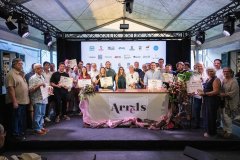
Foodies on Menorca recognises the work of restaurants, hotels and producers
Read more20/09/2026Foodies on Menorca
-
 Read more
Foodies on Menorca Vintage revives the spirit of the 1950s to celebrate Menorcan gastronomy
Read more09/09/2026Foodies on Menorca
-
 Read more
White shrimp gain ground in Menorca’s catches as red shrimp become scarcer
Read more28/08/2026Foodies on Menorca
- Publicitat

-
Publicitat


Sitemap
Cookies policy
Cookie settings
Legal notice
Privacy policy
 © Copyright 2018 - 2026