
César Palomino, president of the Menorca Wine Producers Association
“We still have a way to go, and I think we’re heading in the right direction”
 Foodies on Menorca
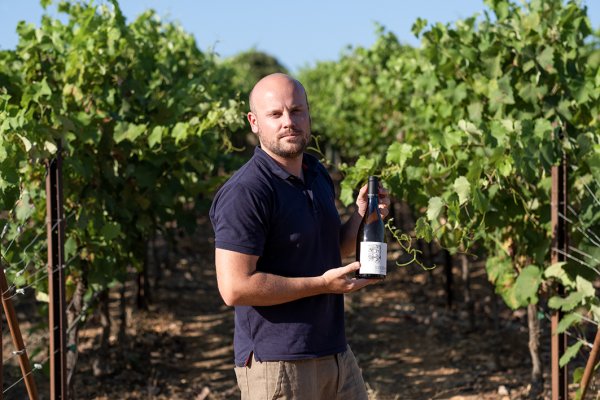
Itziar Lecea/Photos Torralbenc – Although the association does not have a frenetic level of activity, the wine producers of Menorca are very clear about the direction to follow: convincing the restaurant sector and making the island’s wines more visible on home ground. This is how César Palomino explains it. He is in charge of the Torralbenc cellar and president of the Association. Palomino, who arrived from Madrid in 2016, has held the position for three years, aware that he is one of the few who can devote the time that a presidency requires, and the work involved in pushing forward initiatives that benefit all the wineries. We talk about his work and about the state of the wine sector in Menorca in this special wine issue of Foodies.
First of all, could we get to know César Palomino a bit better?
I’m from Madrid, and I studied agricultural engineering in Madrid, at the Universidad Politécnica. Within this institution there is a master’s degree in viticulture and oenology which is very prestigious, since in Spain it is a very broad field. I did it as a professional path, in a very technical way, rather than from the position of being a wine lover. When I finished, I started working for one of my master’s professors, who is a viticulture consultant, although before that I worked as an assistant oenologist in New Zealand to gain experience and to combine the northern and southern hemispheres so that, in a single year, I could do two harvests. It was my professor who recommended me to Torralbenc, in 2016, because he was already advising them. That’s how I came to Menorca and joined the Torralbenc team, which has grown over the years and is still expanding.
Why did you decide to take on the role of president?
When I arrived in Menorca, there were already professional wineries such as Binifadet, Binitord, Imaontanum, Sa Forana… Some of them were very small projects, run in the owners’ free time, so they are not large companies with a structure that would allow us, as an association, to have a lot of activity. For this reason, as one of the few who works in this 100%, I agreed to take on the presidency and dedicate myself to the association, because I have more time to invest in it, as well as a complete training.
As I was saying, the association is not very active because the companies are still small and require a lot of effort and time, but they are on the right path. In this way, we are also trying to provide support through the association to make them better known; in fact, a few weeks ago we were at Barcelona Wine Week, which is a very important wine fair, thanks to the support of the Balearic Government.
In the years you have been in Menorca, how have you seen the sector evolve?
When I arrived, it was a less professionalised sector, less importance was given to quality… although there were people who were making a great effort. The restaurant trade did not back the island’s wines either, and it was hard to find them on wine lists. It was between 2016 and 2020 that we all understood there was a market niche, but that we had to improve in quality and professionalism. In five years we changed the landscape a lot, and we are still changing it with the arrival of new wineries. We still have a way to go, and I think we’re heading in the right direction.
Has having the “Vi de la Terra Illa de Menorca” label helped to professionalise the sector?
No, because the seal has existed for years (since 2002), as well as the Protected Geographical Indication, so we could already put a guarantee label on the bottles to certify compliance with some basic parameters. From there to being perceived as a high-quality wine there is a big gap. And that is where we are starting to close the distance.
Is that being achieved?
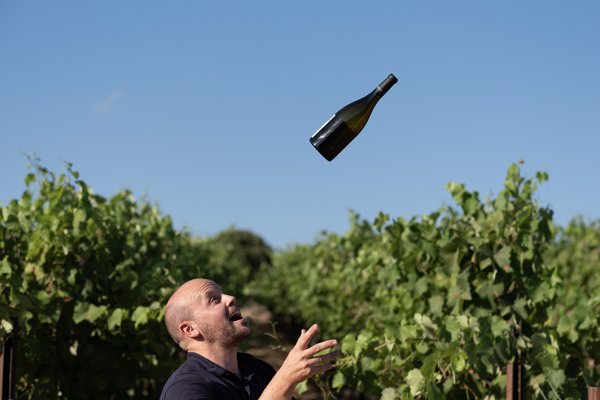
Yes, and the different awards we receive prove it. For example, this year we have submitted wines to various prizes, competitions and scoring companies, and many Menorcan wines have obtained very good ratings. In fact, most Menorcan wines are being recognised as a very good product internationally. This is the case of the gold and silver medals that Decanter has awarded to Torralbenc wines. But we also have wines with gold medals at the Brussels international competition, specifically from Torralba. And very good national scores for Binitord and Binifadet. It is no longer a question of opinion: at international and national level we are achieving a very good reputation. Perhaps we don’t communicate it enough, but these are really important milestones.
Is this translating into recognition at home, especially in the restaurant sector?
We’re moving forward little by little. We don’t sell out a wine just because it has won a gold medal. But it is true that we have taken steps as a joint entity. Wine is something very subjective, which means that in most restaurants diners need the sommelier to tell them that a wine is good. That’s why, at consumer level, I think we need some reinforcement and a figure who can reassure them by saying that, indeed, with a Menorcan wine they are making a good choice in terms of price and quality. So, having good prescribers is essential. Is the wine better because it has obtained a good score? No, it’s the same wine, but restaurants feel more comfortable talking about Menorcan wines because they know that someone outside the island is scoring them very highly. It is important to break down the barrier between restaurants and the end customer, and gaining such recognition helps sales a great deal.
Is this the association’s goal?
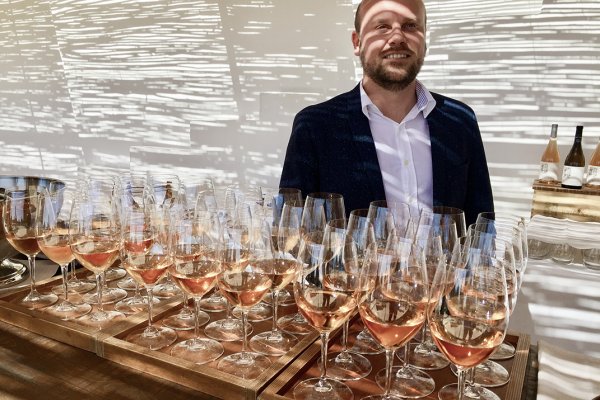
Yes, exactly. There are wine regions whose quality nobody questions. But new regions, such as Menorca, still have to prove themselves. And nobody is a prophet in their own land until people from outside come and tell us that we have a very good wine. We have to open doors, because we are a very young industry on the island, and anything that helps demonstrate that our wines are good is a boost. We have to convince restaurant owners to put us on their wine lists. I think we started to break through that barrier about five years ago, doing a lot of fieldwork, visiting many restaurants, getting them to taste the wines. Now it’s time to keep winning over restaurateurs and diners, who are the ones who ultimately decide to drink it.
What’s more, we are an important sector within Menorca’s countryside, as we cultivate the land and create jobs and wealth. And we are recovering totally abandoned areas, with substantial investment. In the end, the success of the wine sector also implies this part of land recovery, and it is another source of wealth for rural areas and for the value of the countryside. In addition, it is a complement to a high-quality tourism industry.


Latest posts
-
 Read more
Tonia Pons Prats: “If we lose Ciutadella’s Market Square, we will also lose a way of buying and eating fish”
Read more09/07/2026Foodies on Menorca
-
 Read more
Josep Caules: “Our cuisine begins at sea: we want to know where every product comes from and how it reaches the plate”
Read more30/06/2026Foodies on Menorca
-
 Read more
Nensi Jover: “Menorcan cuisine needs time, patience and love”
Read more16/06/2026Foodies on Menorca
-
 Read more
Juan Hernández, Manager of Sa Llotja: “It gives the impression that Europe wants us to depend on third countries”
Read more20/05/2026Foodies on Menorca
- Publicitat

-
Publicitat



Sitemap
Cookies policy
Cookie settings
Legal notice
Privacy policy
 © Copyright 2018 - 2026